


When Does Fit-Gap Analysis Happen?
Fit-Gap Analysis is conducted during the Explore phase of SAP Activate immediately after Fit-to-Standard (FTS) workshops. The FTS workshop is the structured demonstration where a consultant walks business process owners through SAP Best Practice processes. Fit-Gap Analysis is the structured outcome of each workshop: every process step is formally classified, documented, and signed off. It does not happen before or during the workshop, it is the recorded decision produced by it. The Fit-Gap document created in Explore becomes the binding scope input for the Realize phase.
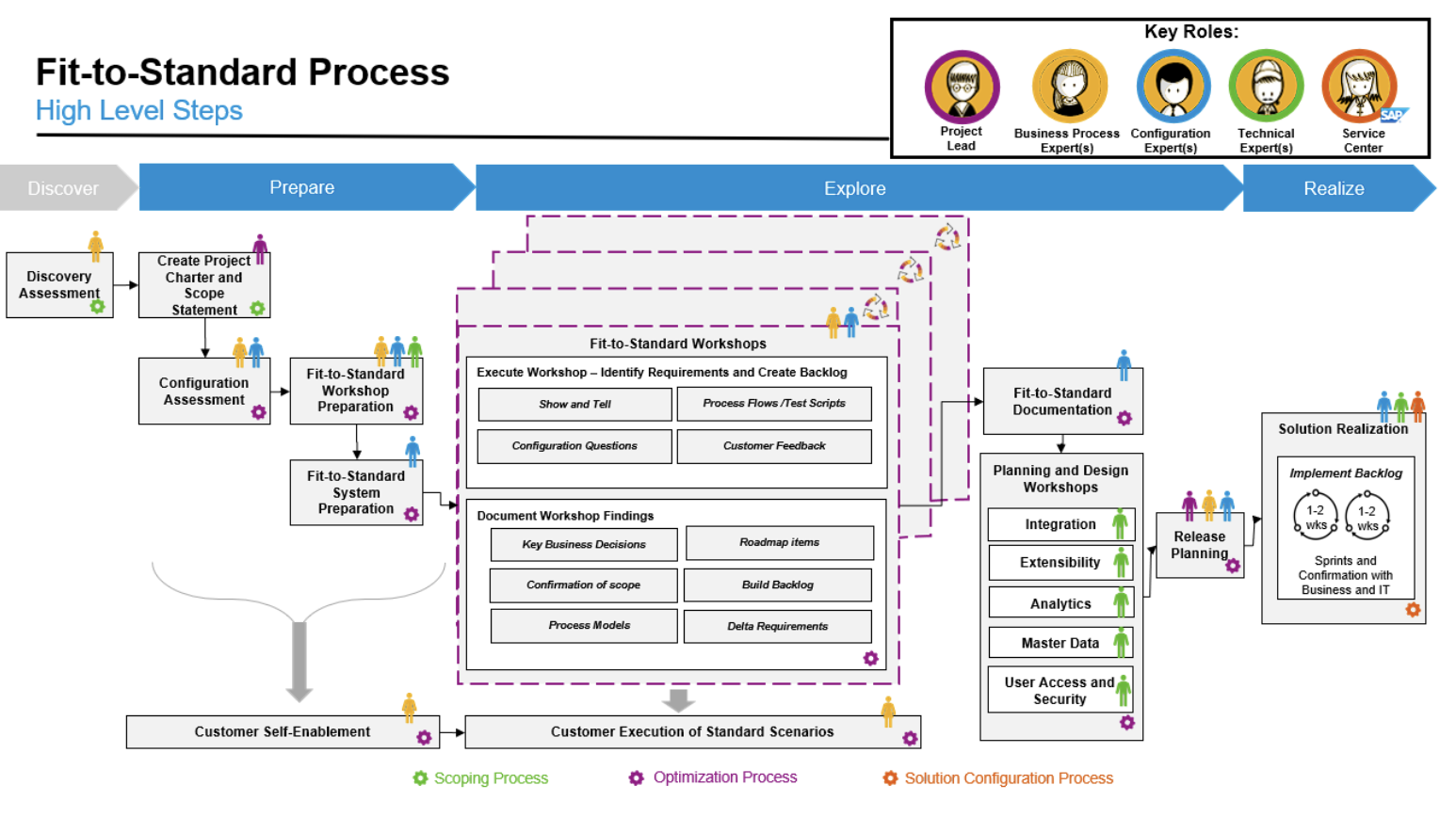
Unlike traditional ERP implementations where gaps triggered custom development by default, SAP S/4HANA Public Cloud enforces a disciplined resolution hierarchy that protects the clean core.
Understanding the Diagram
Process Inputs (left gear cluster): Before the FTS workshop begins, the project team must prepare four key inputs: a Scope Statement, Configuration Assessment, Fit-to-Standard Preparation, and Customer Enablement materials. These ensure workshops are productive and time is not wasted on unprepared stakeholders.
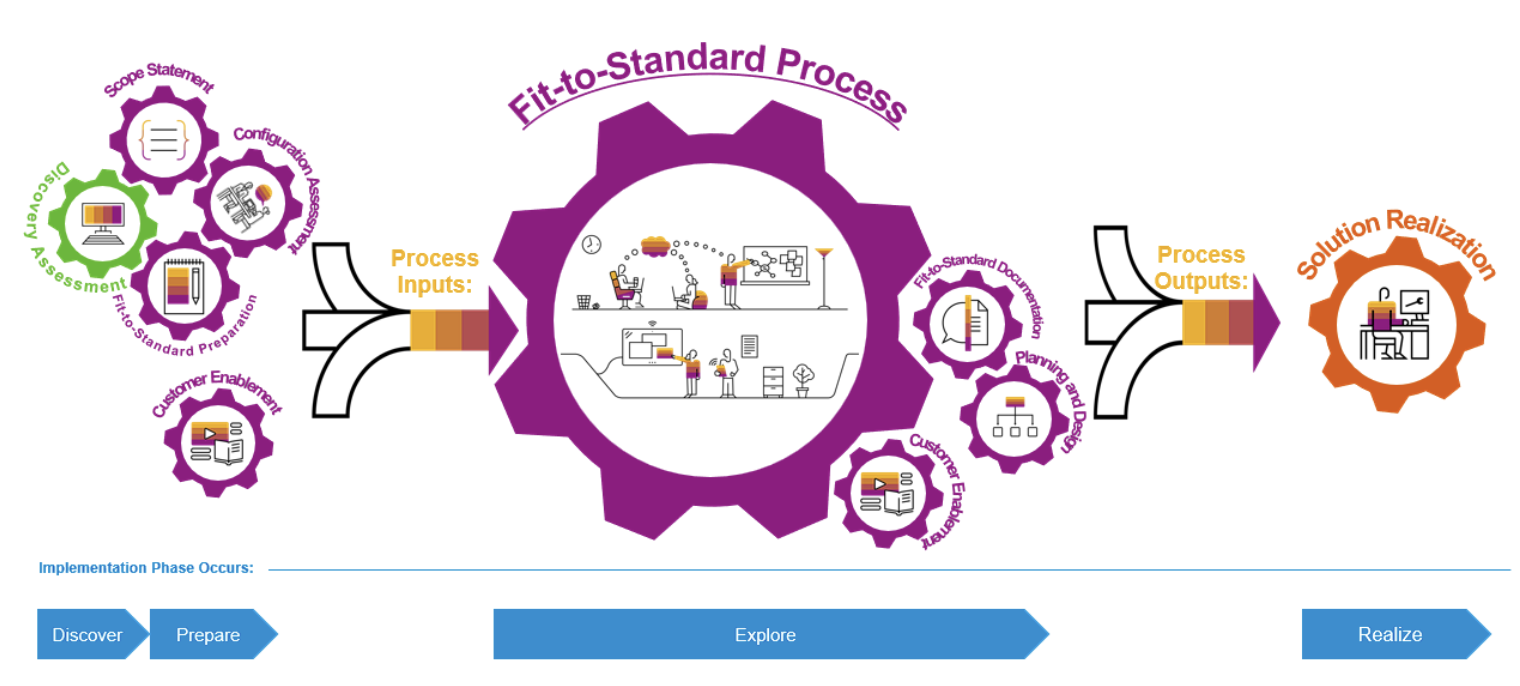 The Workshop (center gear): The Fit-to-Standard workshop itself where the consultant demonstrates SAP Best Practices and the business makes Fit-Gap decisions in real time. This is the Explore phase core activity.
Process Outputs (right): The workshop produces three outputs that feed directly into Realize Fit-to-Standard Documentation (the Fit-Gap document), Planning and Design decisions, and Customer Enablement materials for user adoption. Together these outputs drive Solution Realization.
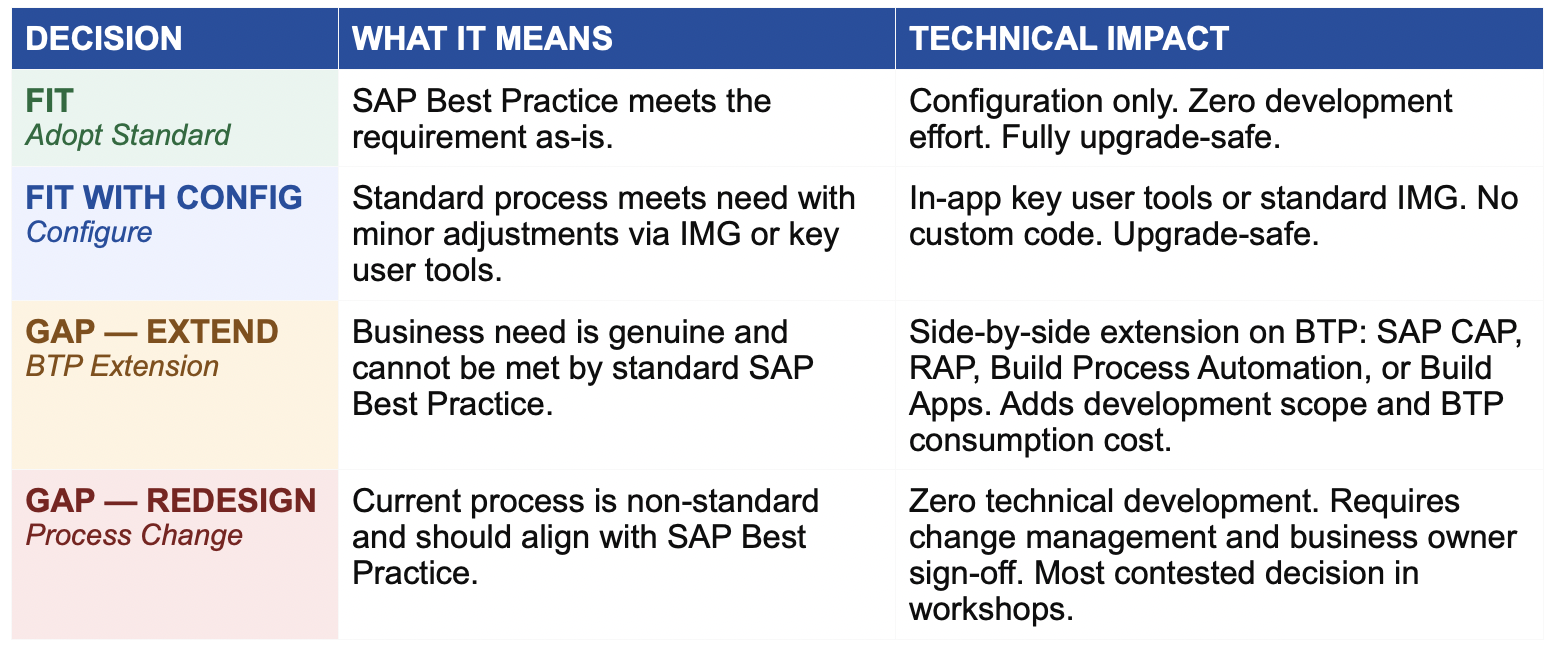
The Four Resolution Paths
What Drives Gap Volume
The number of gaps in a Fit-Gap analysis is directly correlated to three factors: custom code volume in the current landscape (more Z-programs = more process deviations from standard), industry process complexity (manufacturing and utilities have higher gap rates than services organizations), and organizational willingness to adopt standard — which is a change management variable, not a technical one.
Governing the Fit-Gap Output
Left ungoverned, Fit-Gap workshops accumulate gaps. Every “we’ve always done it this way” becomes a BTP extension request. The project architect’s responsibility during Explore is to challenge gap decisions against two criteria:
- Is this a genuine business differentiator that cannot be met by SAP Best Practice?
- Is the standard process technically incapable of meeting the requirement, or is the organization simply resistant to change?
Only the first category justifies a BTP extension. The Fit-Gap document, reviewed and signed by the business process owner and solution architect before Realize begins, is the governance mechanism that enforces this discipline.