



The organizational structure in SAP S/4HANA Public Cloud serves as the foundation for sourcing and procurement processes. While the Client and Company Code establish the enterprise and legal structure of the system and are typically configured as part of the Finance workstream, the Realize phase extends this foundation by defining the organizational units that support procurement, inventory, and logistics operations.

These includes the Plant, which represents the location where materials are managed and business activities are performed; Storage Location, which identifies where inventory is physically stored within a plant; Purchasing Organization, which is responsible for procurement activities and supplier negotiations; and Shipping Point, which manages the processing and execution of outbound deliveries. The Purchasing Group, which represents the buyer or purchasing team responsible for operational procurement, is maintained separately within the S/4HANA Cloud configuration and is referenced by procurement transactions and master data rather than being part of the organizational enterprise structure.
Plant, Storage Location, Purchasing Organization, and Shipping Point are configured through Central Business Configuration (CBC) which can be access under Manage Your Solution → Configure Your Solution → Organizational Structure, where the enterprise hierarchy can be expanded and each organizational unit created directly under its corresponding parent node. Purchasing Group, however, is maintained through its dedicated configuration activity within the S/4HANA Cloud Development environment.
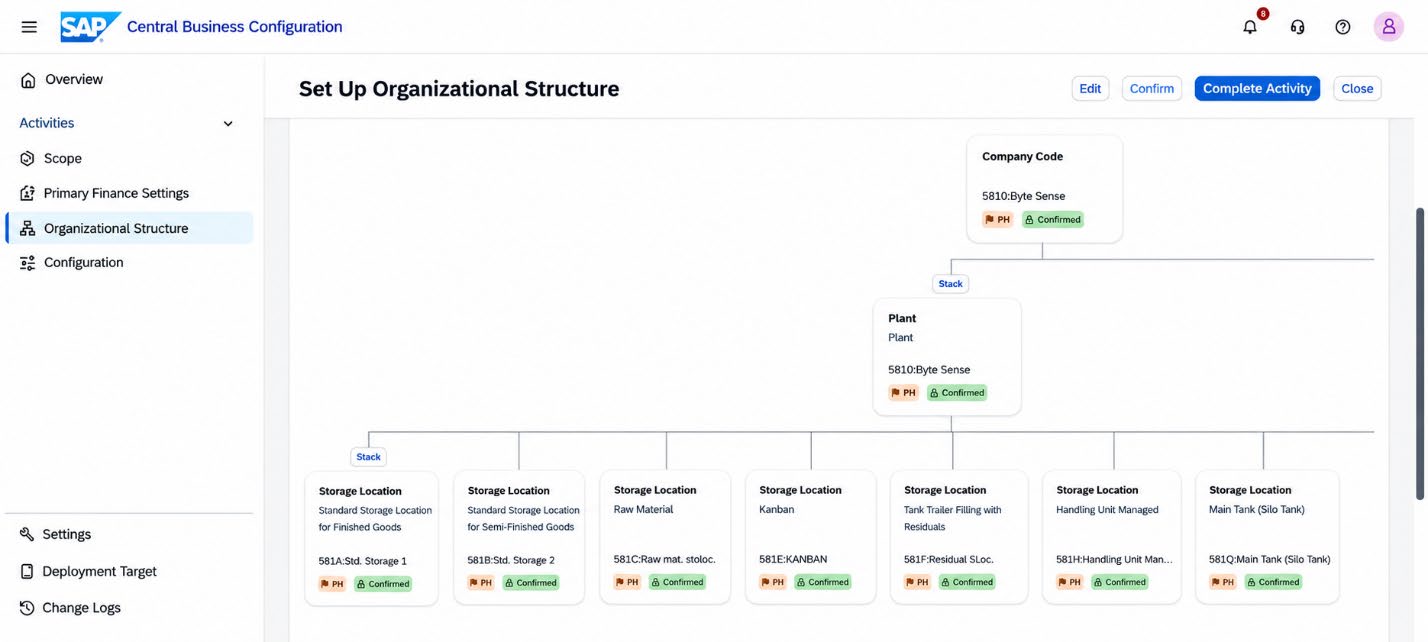
Sequencing remains critical during the Realize phase. Plant and Storage Location should be established first, followed by Purchasing Organization and Shipping Point, as these organizational units are directly referenced by procurement and inventory processes. Purchasing Group should be configured before business users begin transactional testing to ensure that purchase requisitions, purchase orders, and related procurement documents can be assigned to the appropriate buyers. Defining these elements early also prevents unnecessary rework during material and supplier master data migration, as these records depend on the underlying organizational structure.