

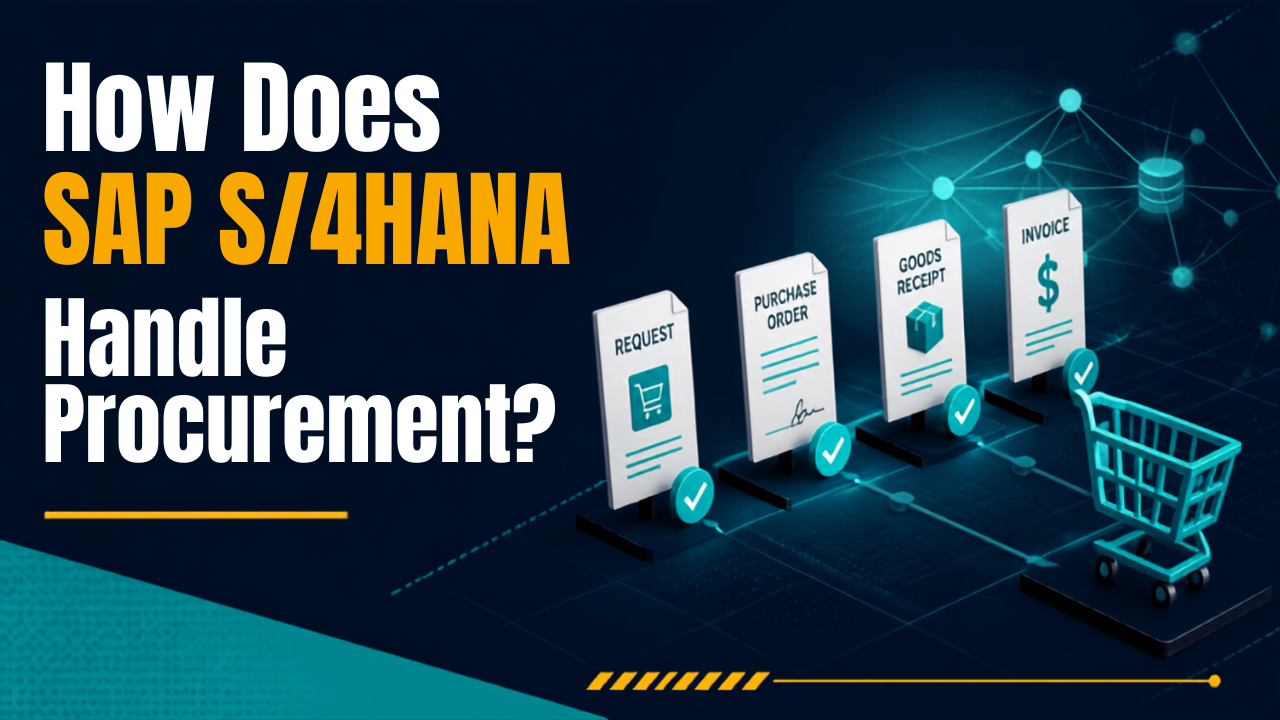
Procure-to-Pay (P2P) is the complete purchasing cycle from identifying a business requirement to paying the supplier. In SAP S/4HANA, these activities are connected, allowing Procurement, Warehouse, and Finance to work with the same purchasing information.
Procure-to-Pay Process
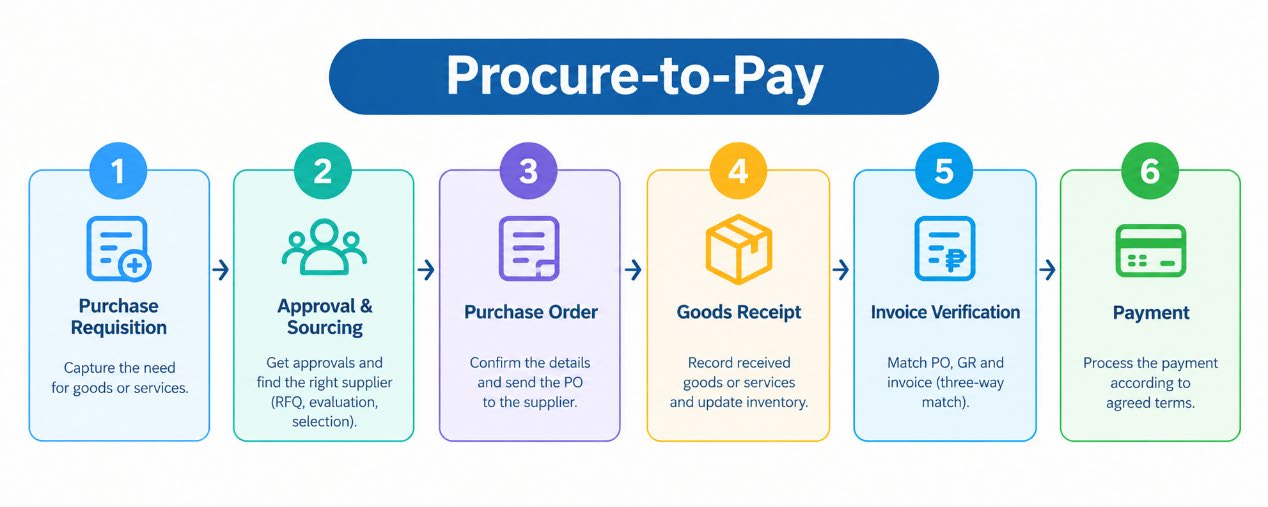
- Identify the Requirement
- The process begins when a department needs a material or service. A Purchase Requisition (PR) captures the requirement, including details such as quantity, required date, and other purchasing information.
- Approve and Process the Requirement
- Depending on the organization’s workflow, the PR goes through the required approvals before Procurement can proceed. Once approved, Procurement can begin sourcing the requirement.
- Source the Supplier
- If a suitable supplier is not already available, Procurement can request quotations through an RFQ. Supplier quotations can then be evaluated based on factors such as price, specifications, delivery terms, and payment conditions.
- Create the Purchase Order
- After the supplier is selected, the purchasing team creates a Purchase Order (PO). The PO formalizes the purchasing details and is sent to the supplier.
- Receive the Goods or Services
- When the supplier delivers, the business records the Goods Receipt (GR) or Service Entry Sheet (SES) against the PO. This confirms what was received and updates the relevant inventory records.
- Verify the Supplier Invoice
- The supplier invoice is processed and checked against the purchasing documents. The three-way match compares the PO, Goods Receipt, and Invoice to identify quantity or price discrepancies.
- Process the Payment
- Once the invoice has been successfully verified and approved, Finance proceeds with payment according to the agreed payment terms.
One Connected P2P Process. Instead of managing each step separately, businesses gain greater visibility into purchasing commitments, deliveries, invoices, and payments. The goal is simple: make every purchase easier to track, control, and manage from request to payment.